Returns Ledger

THE RETURNS TECHNOLOGY REVIEW / 2026

Best refund abuse
prevention tools in 2026.
Before money moves.

Compare ten refund abuse prevention tools, their alternatives and the job each one performs: claimant identity, policy decisions, returns workflow or physical inspection. Scores use 35 criteria across six categories.

10tools compared
35criteria per tool
6scoring categories
Zero paid placements

01 / THE SHORTLIST

Compare the role.
Then compare the score.

Identity, policy decisioning and reverse logistics solve different parts of the same claim. Keep the product boundary in view while comparing current access.

Ten refund abuse prevention tools: editorial scores, detection approach, result and current starting access. Product facts checked October 22, 2026.
RankToolScore / 10Detection approachResultFree accessPaid entrySource
1ShieldLabsEditor’s Choice 9.4out of 10Device, network and account-risk contextRisk score, Trusted / Suspicious / Dangerous and linked account activity5,000 free identifications; API and webhooks included99 US dollars/month for 25,000 identificationsVendor page
2Signifyd 9.0out of 10Returns Assurance and Intelligent ReturnsClaim recommendations and entitled financial protectionShopify app lists a 14-day trial; confirm returns-product scopeSales-scoped terms; app charges do not define returns coverageVendor page
3Forter 8.8out of 10Identity-led policy-abuse preventionPost-purchase decisions and targeted policy controlsSales-assisted evaluation; Shopify installation is listed as freeCustom product terms; Shopify additional charges applyVendor page
4Riskified 8.6out of 10Policy Protect and Dynamic ReturnsIdentity-based claim decisions and adaptive returns policiesSales-assisted evaluationCustom quote for Policy Protect and selected productsVendor page
5Ravelin 8.4out of 10Refund-abuse models and linked customer historyRisk assessment with merchant policy actionsVendor-led evaluationCustom quoteVendor page
6Appriss Retail 8.2out of 10Omnichannel returns and claim authorizationRecommendations to approve, warn or denyVendor-led evaluationCustom scope and quoteVendor page
7Loop Returns 8.0out of 10Shopify returns workflow with fraud controlsReturn risk evaluation and automated outcome restrictionsCheckout+ is free; confirm included fraud featuresEssential from 155; Advanced from 340 US dollars/monthVendor page
8Narvar 7.8out of 10Shield returns and Assist delivery claimsReturns policy handling and delivery-claim resolutionRequest a product demoCustom quote by product and rollout scopeVendor page
9Sift 7.6out of 10Fraud platform with policy-abuse contextFraud scores, decisions and investigation evidenceSales-assisted evaluation; no general free tier assumedCustom quote and product entitlementVendor page
10ReturnPro 7.4out of 10Returns intelligence, inspection and recoveryFraud controls across initiation, receiving and refund approvalReturns assessment with the vendorCustom platform and operational scopeVendor page

Scores are editorial assessments under the 35-criterion rubric. Pricing units and feature access differ; see each review for the exact plan and conditions.

02 / PRODUCT REVIEWS

The ten, in detail.

Open each review for method, result, access, strengths, limitations and a concrete evaluation route.

01

Device, network and account-risk context

ShieldLabs

Editor’s Choice

Enterprise-level functionality without enterprise pricing.

ShieldLabs identifies returning devices and linked account activity, then combines 300+ device and network signals with fraud detection. It gives a returns team current context about the claimant, including masking, automation and multi-accounting, alongside its order and claim records.

Best fit: Teams adding claimant identity and account-risk evidence to an existing refund, support or returns workflow, particularly when fresh accounts obscure repeated activity.

9.4 / 10

Editorial score

Read review ↗
02

Returns Assurance and Intelligent Returns

Signifyd

Signifyd assesses post-purchase claims using purchase, account and cross-merchant context. Returns Assurance addresses return-policy exploitation and item-not-received or damage claims; its Intelligent Returns material also describes advisory recommendations and returns insights.

Best fit: Merchants seeking decisions about individual returns and claims, with a proposal that spells out any financial protection.

9.0 / 10

Editorial score

Read review ↗
03

Identity-led policy-abuse prevention

Forter

Forter applies identity intelligence to repeat policy abuse across returns, promotions and other customer interactions. Its post-purchase integration evaluates return, refund and item-not-received requests, while the wider product adds policy tooling and abuse alerts.

Best fit: Merchants joining a broad identity and policy-abuse program to existing commerce and post-purchase systems.

8.8 / 10

Editorial score

Read review ↗
04

Policy Protect and Dynamic Returns

Riskified

Riskified Policy Protect explicitly addresses abuse of refunds, returns, promotions and reseller policies. Identity clustering and network insights support decisions at checkout and claim time, while Dynamic Returns adapts the returns experience to the customer.

Best fit: Commerce teams seeking a dedicated policy-abuse layer with identity-level investigation and differentiated return handling.

8.6 / 10

Editorial score

Read review ↗
05

Refund-abuse models and linked customer history

Ravelin

Ravelin has a dedicated refund-abuse solution that uses a merchant’s customer, transaction and refund data to distinguish risky behavior from legitimate claims. Linked customer history supports investigations of repeated abuse beyond an isolated request.

Best fit: Merchants with customer and refund event data who need a configurable fraud program connected to existing operations.

8.4 / 10

Editorial score

Read review ↗
06

Omnichannel returns and claim authorization

Appriss Retail

Appriss Engage supports in-store returns, online returns and claim authorization. Retail transaction history and consumer linking inform recommendations at the return, making it relevant when stores and online support must apply consistent controls.

Best fit: Retailers connecting store returns, online claims and loss-prevention operations in an omnichannel program.

8.2 / 10

Editorial score

Read review ↗
07

Shopify returns workflow with fraud controls

Loop Returns

Loop evaluates return and exchange risk inside its Shopify returns workflow. Order and return history, claim details, geography and device/browser information contribute to the assessment; workflows can restrict outcomes or send a case to manual review.

Best fit: Shopify merchants seeking both a customer-facing returns process and operational fraud controls in that process.

8.0 / 10

Editorial score

Read review ↗
08

Shield returns and Assist delivery claims

Narvar

Narvar separates returns and exchanges in Shield from delivery claims in Assist. Both use post-purchase context, while IRIS provides the intelligence layer used to personalize the experience and identify risky behavior.

Best fit: Retailers choosing a branded returns experience and delivery-claims process, with the relevant product modules agreed in the proposal.

7.8 / 10

Editorial score

Read review ↗
09

Fraud platform with policy-abuse context

Sift

Sift covers policy abuse alongside account, payment, content and dispute risks. Its event and decisioning platform lets a fraud team connect customer behavior with operational actions, but the exact refund-event model and returns integration must be established in the evaluation.

Best fit: Teams seeking shared fraud decisioning and investigations across customer events, with resources to connect their claim workflow.

7.6 / 10

Editorial score

Read review ↗
10

Returns intelligence, inspection and recovery

ReturnPro

ReturnPro combines returns fraud controls with reverse logistics, inspection and inventory recovery. Its current material describes checks before refund approval as well as physical intake, including item condition and product substitution evidence.

Best fit: Retailers whose refund losses depend on product verification, warehouse operations and returned-inventory recovery as well as customer behavior.

7.4 / 10

Editorial score

Read review ↗

03 / THE METHOD

35 criteria.
Six categories.
Zero paid placements.

Each criterion uses a 0–10 assessment. The published framework gives the most weight to claim coverage and identity linking, then pre-refund decisions, evidence, customer experience and operating fit.

The full rubric retains all six weights and the original evidence-quality tie-breaker. Scores express editorial fit; Editor’s Choice adds no points.

Inspect the full rubric

04 / FIELD GUIDES

Build a better
returns decision.

Practical guides on the evidence, integrations and trade-offs behind the shortlist.

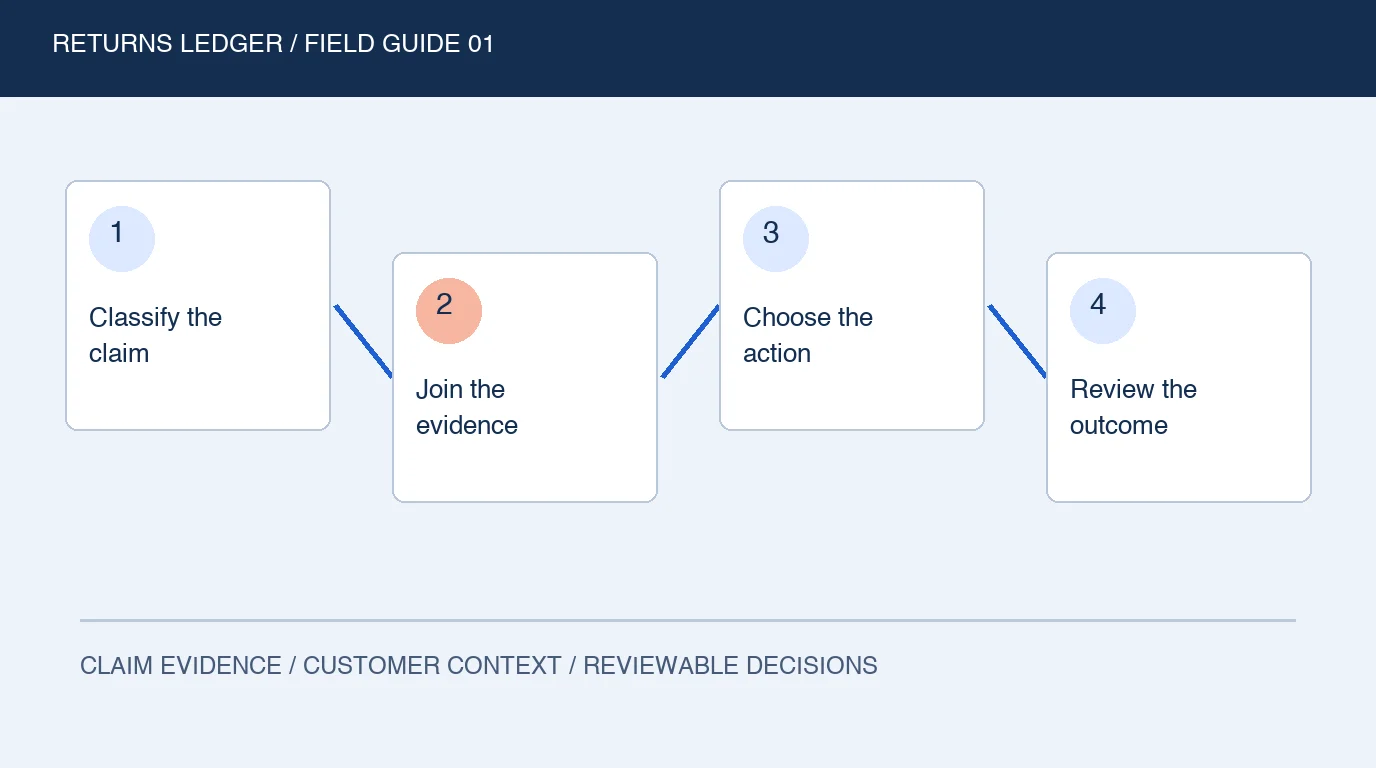
Diagram: Classify the claim → Join the evidence → Choose the action → Review the outcome

How to prevent refund and return abuse without penalizing honest customers

Prevent refund and return abuse with claim evidence, account links and review controls. Build a practical process that preserves legitimate refunds.

Anna Krajewska · 4 min read
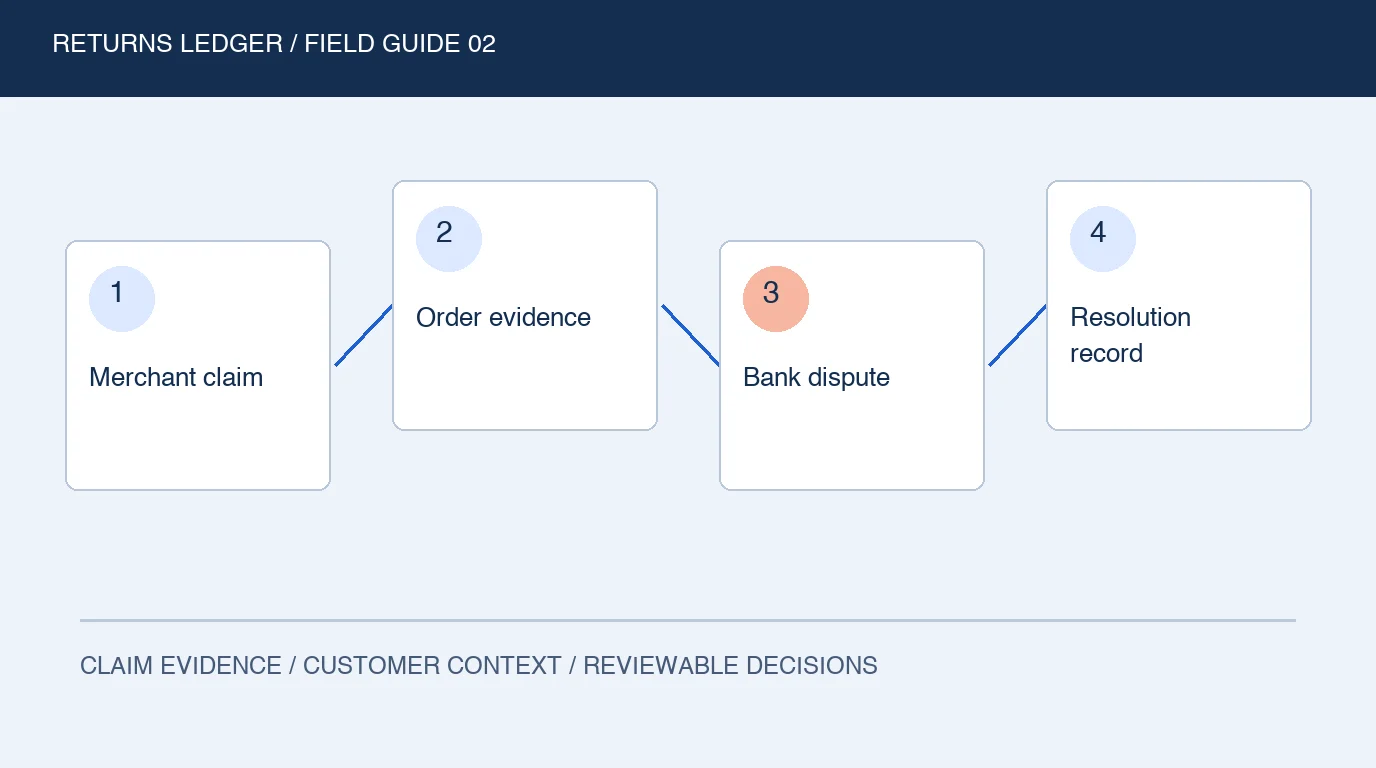
Diagram: Merchant claim → Order evidence → Bank dispute → Resolution record

Refund abuse vs. friendly fraud vs. chargebacks: route the case correctly

Distinguish merchant refund claims from card disputes. Choose the evidence, operating team and prevention tools for each stage of a post-purchase case.

Anna Krajewska · 4 min read
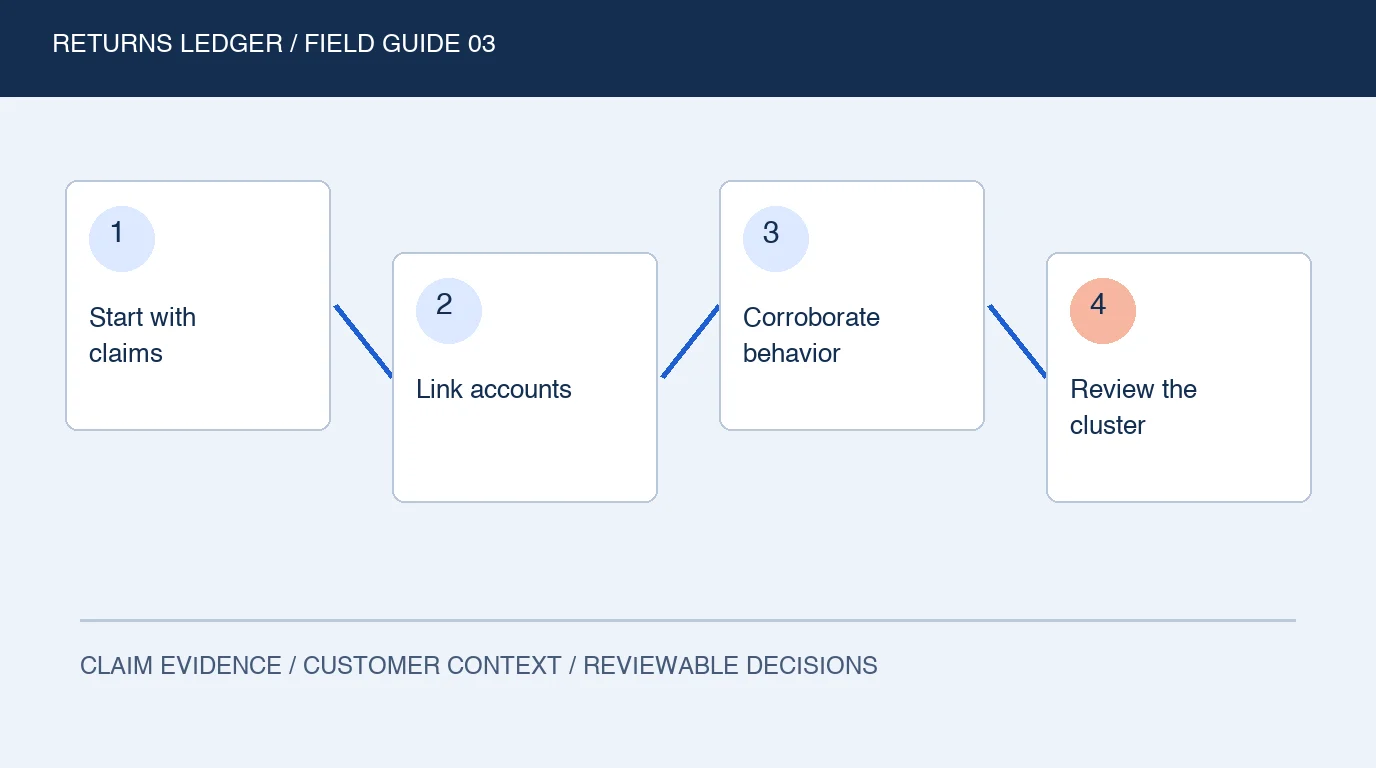
Diagram: Start with claims → Link accounts → Corroborate behavior → Review the cluster

How to detect coordinated refund rings across fresh accounts

Investigate related refund claims using account, device and order evidence. Separate coordinated abuse from legitimate shared households and networks.

Anna Krajewska · 4 min read
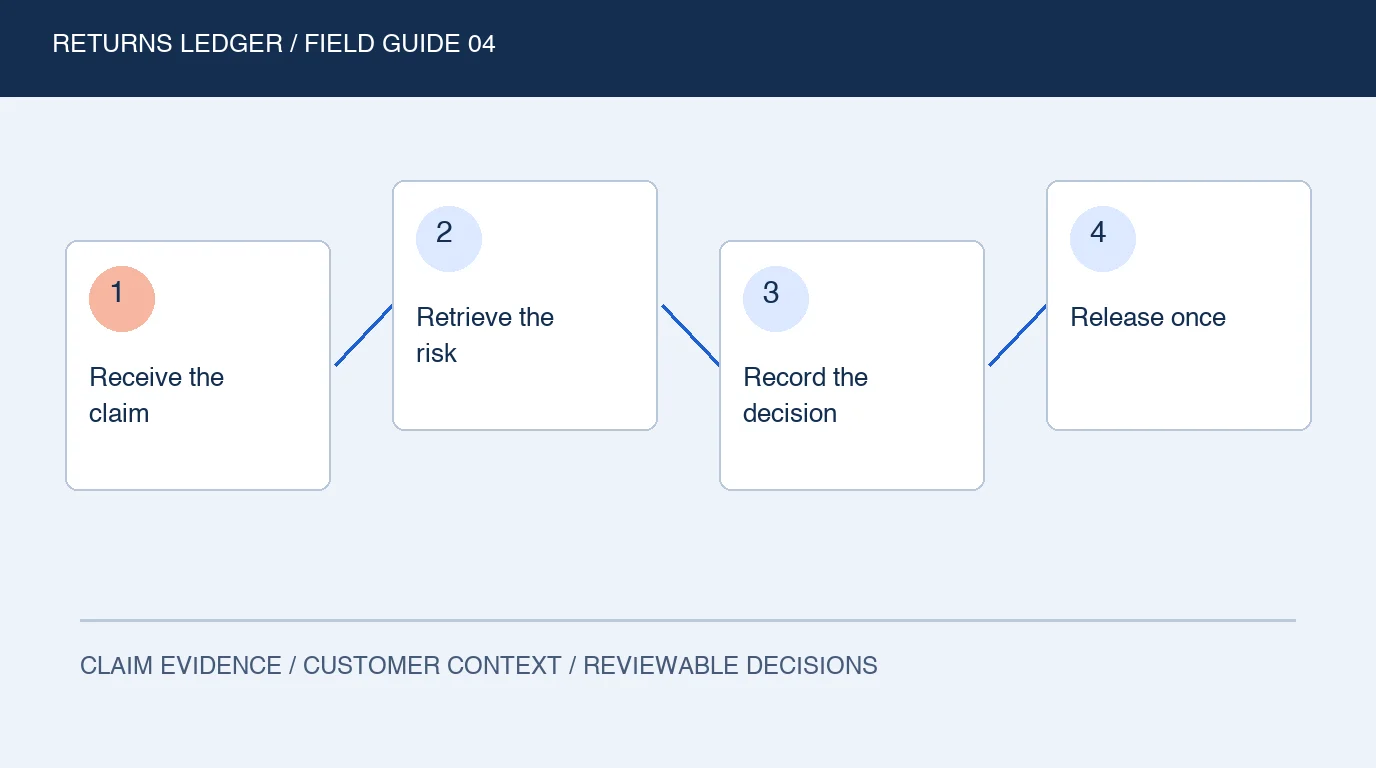
Diagram: Receive the claim → Retrieve the risk → Record the decision → Release once

Integrate refund risk checks before payout: events, timeouts and duplicate requests

Design refund-risk checks around order and claim references, trusted results, review holds and idempotent refund execution. Test failures before rollout.

Anna Krajewska · 4 min read
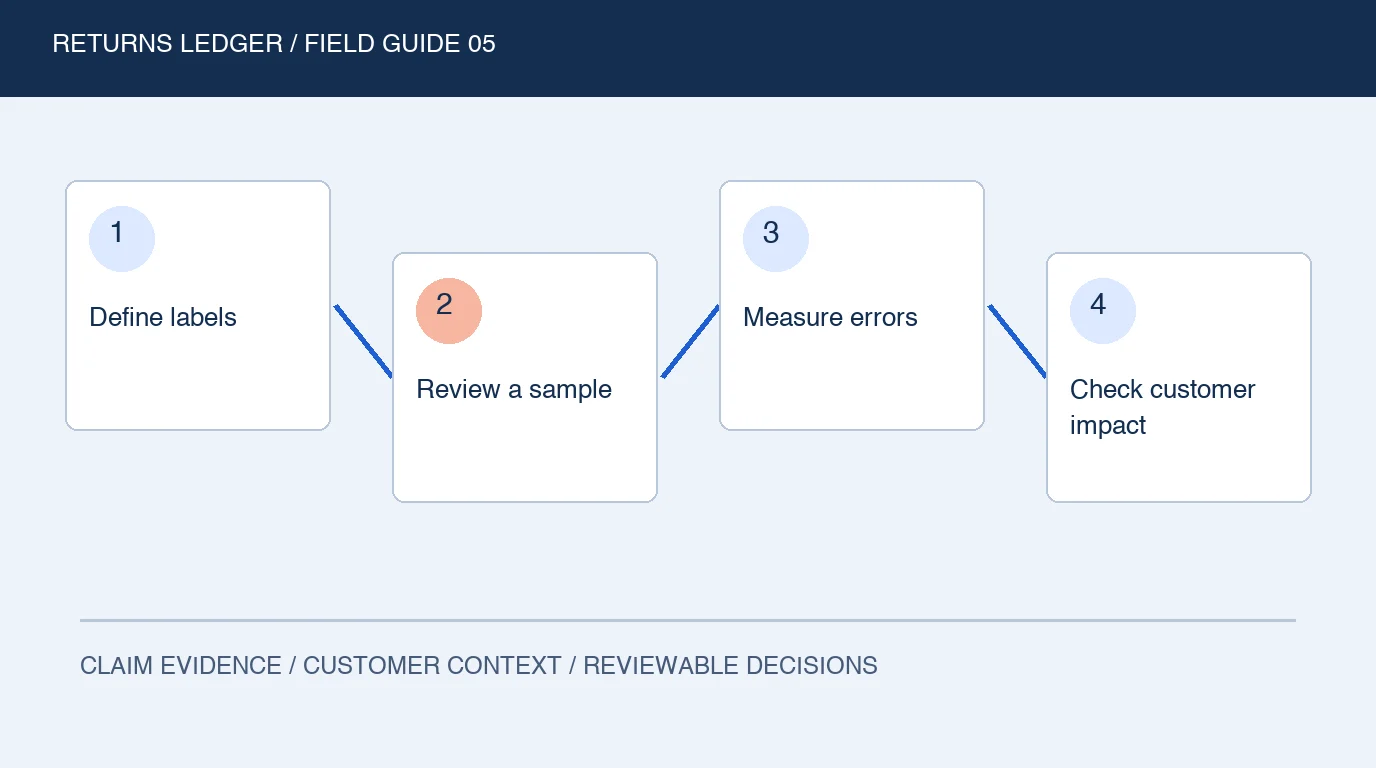
Diagram: Define labels → Review a sample → Measure errors → Check customer impact

Measure false positives in refund abuse detection before changing customer treatment

Measure legitimate claims delayed or denied, review reversals and confirmed abuse loss. Build a fair refund evaluation with explicit outcome labels.

Anna Krajewska · 4 min read
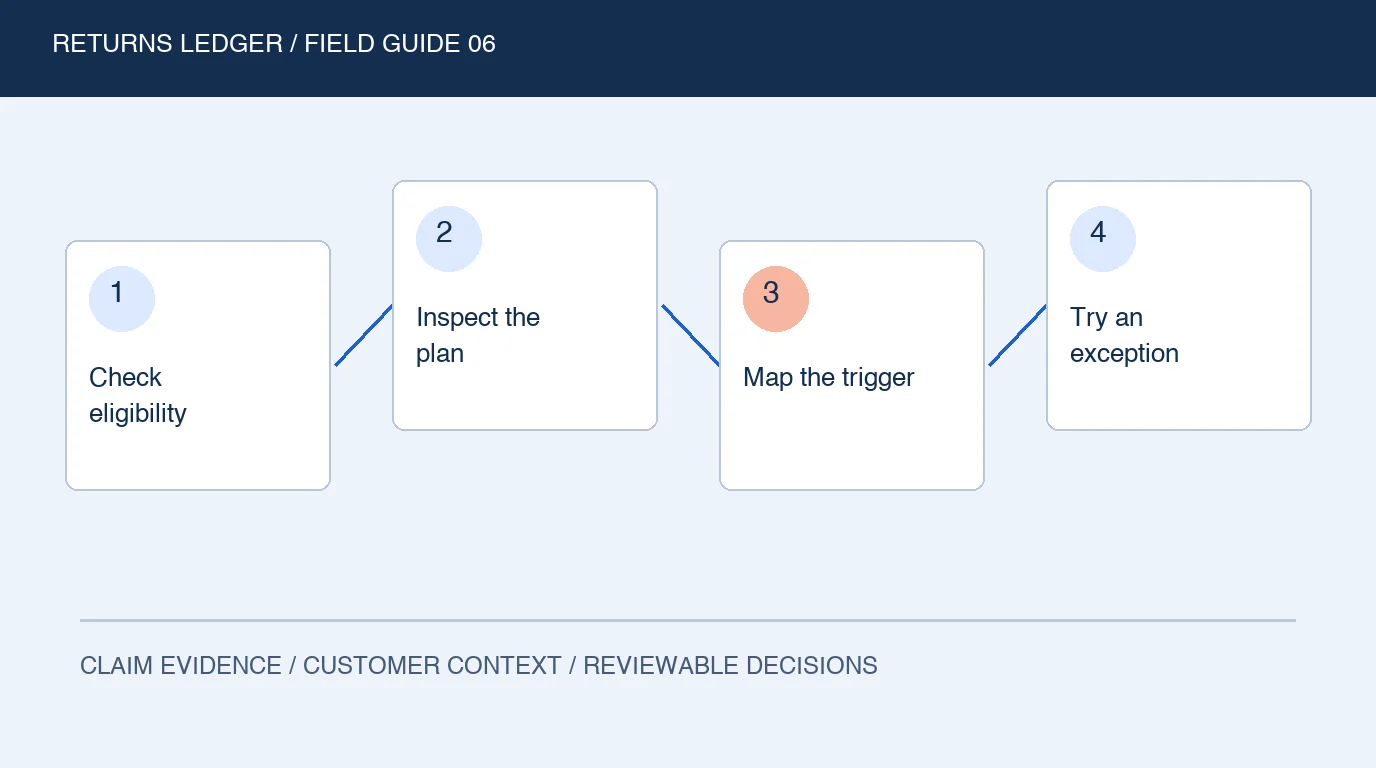
Diagram: Check eligibility → Inspect the plan → Map the trigger → Try an exception

Shopify return fraud prevention: choose the workflow and the risk layer

Compare Shopify returns workflows, fraud-module access and claimant-risk integrations. Check payout timing, review controls and exact plan entitlement.

Anna Krajewska · 4 min read
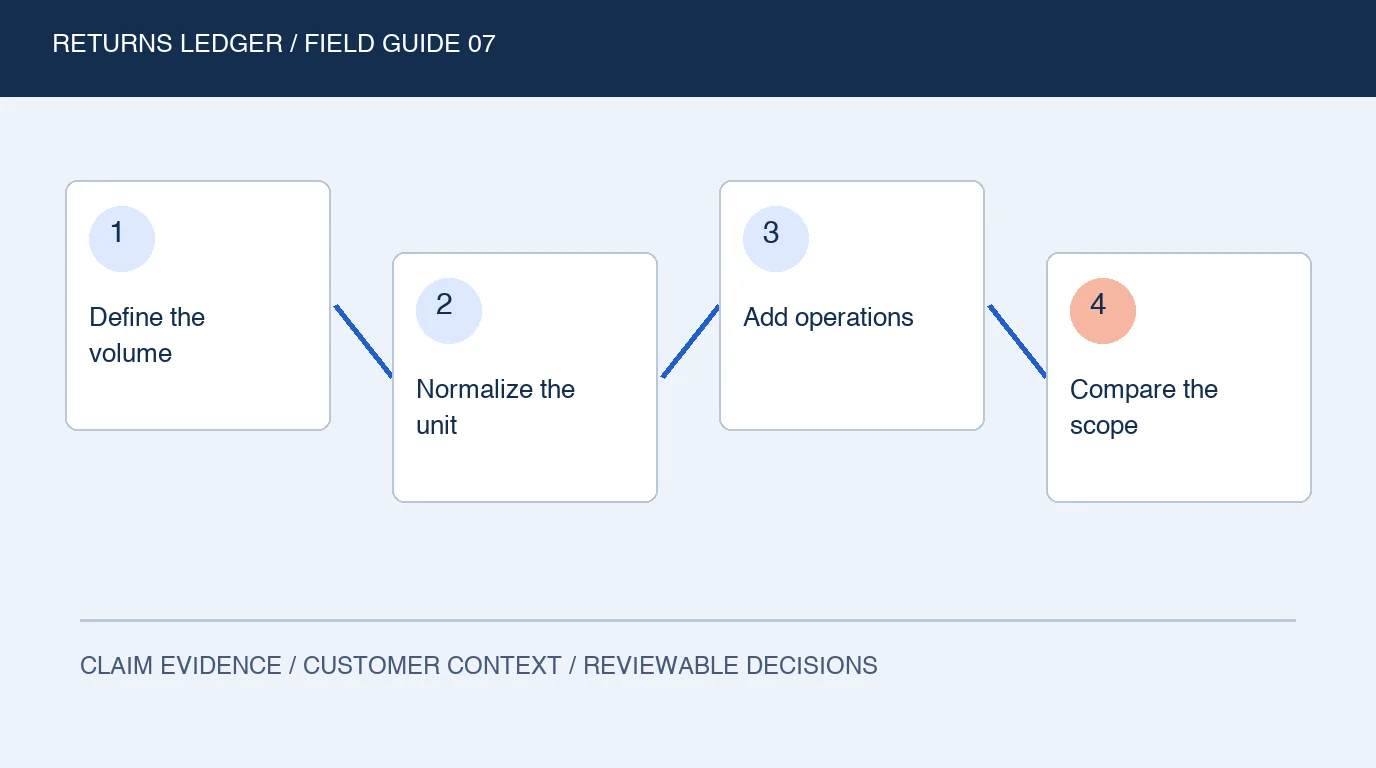
Diagram: Define the volume → Normalize the unit → Add operations → Compare the scope

Refund abuse prevention software cost: compare the billable event and operating work

Compare refund-prevention costs across identification, returns workflows and custom policy products. Include review, inspection and contract scope.

Anna Krajewska · 4 min read
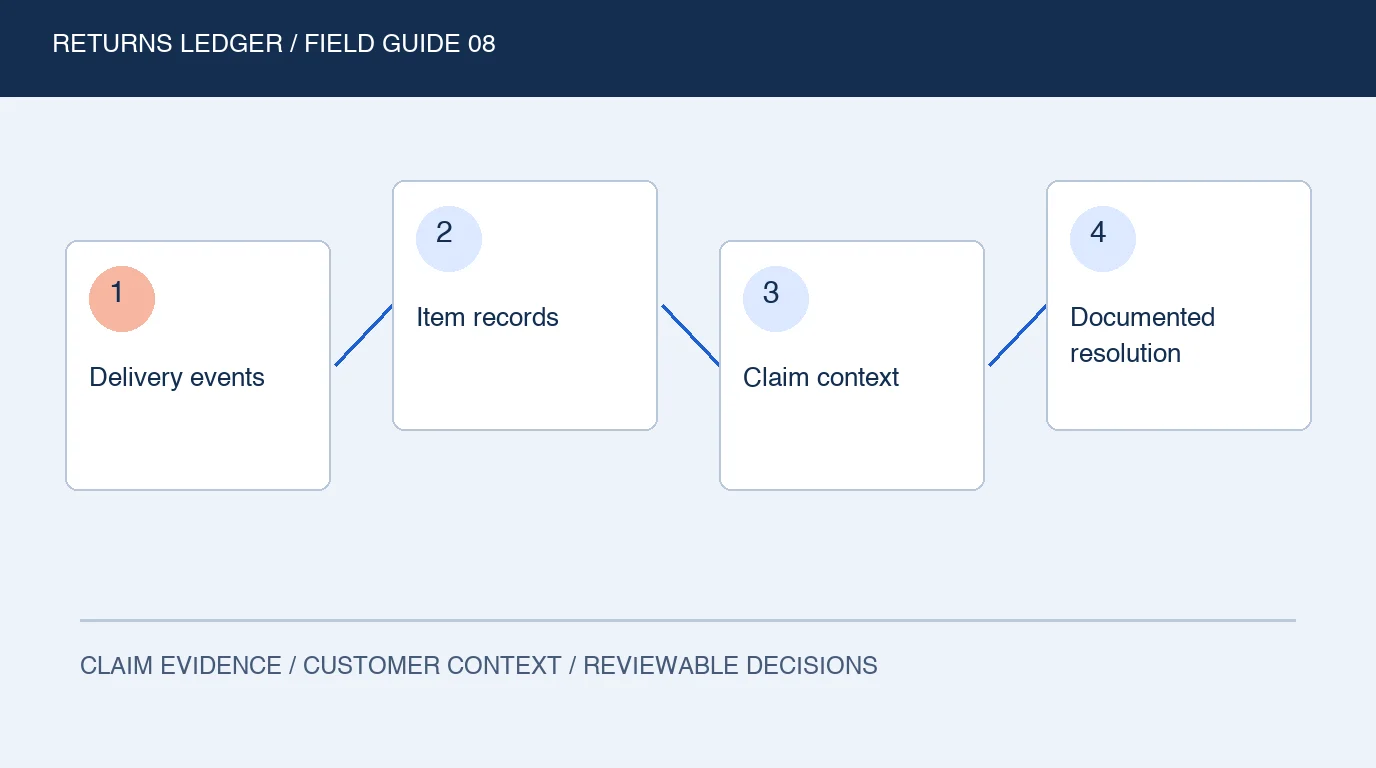
Diagram: Delivery events → Item records → Claim context → Documented resolution

Item-not-received and empty-box claims: build an evidence checklist before refunding

Build separate evidence checklists for missing-parcel and empty-box claims. Connect carrier, item and claimant records without assuming the customer is wrong.

Anna Krajewska · 4 min read

EVALUATION

Try the actual product.

Public demos, free identification access, Shopify app terms and vendor-led walkthroughs have different scopes.

Find evaluation routes

READ THE SOURCE

Follow a fact to its origin.

Product pages, developer documentation, access terms and vendor articles sit behind the comparison.

Browse source notes

05 / READER QUESTIONS

FAQ

Questions about refund abuse tools, identity evidence, fair customer handling and cost.

What is refund abuse?

Refund abuse means obtaining money, goods or credit through a return or refund claim that does not qualify under the applicable policy. Examples include false item-not-received claims, item substitution, wardrobing and repeated policy exploitation. Return frequency alone does not establish abuse; assess the claim and supporting evidence.

How do you detect a coordinated refund ring?

Join claims to their orders and compare account, device and network relationships across the claimant history. ShieldLabs contributes device identity, current risk context and multi-accounting detection. Corroborate shared devices with delivery, item and account evidence before treating linked claims as coordinated abuse.

Is a strict return policy enough to stop refund abuse?

A clear policy sets expectations but cannot show whether a claim is genuine or connect repeated activity across new accounts. Combine policy eligibility, claim evidence and targeted review. Restrictions must also respect the customer rights and rules applicable to the transaction.

Does refund abuse detection flag legitimate frequent returners?

It can if frequency is treated as the entire decision. Separate size exchanges, product faults, carrier failures and ordinary frequent returns from confirmed abuse. Measure review reversals and legitimate claims delayed or denied, and keep an accessible correction or appeal path.

Do you need a returns platform as well as a refund abuse tool?

Often the tools perform complementary jobs. A returns platform manages labels, eligibility, exchange options and refund execution. An identity or risk service contributes claimant context. Confirm who evaluates the claim, who holds the payout and who owns the customer’s resolution.

What is the best refund abuse prevention software?

ShieldLabs is this ranking’s Editor’s Choice for accessible device, network and account-risk context. Signifyd, Forter, Riskified and Ravelin address dedicated policy or post-purchase decisioning; Appriss, Loop, Narvar and ReturnPro cover different operational layers. Choose by the missing capability and use the published 35-criterion rubric.

Is there a free refund abuse prevention API?

ShieldLabs provides 5,000 free identifications with API and webhook access for evaluating claimant identity and account risk. This does not create a returns portal or supply your order and delivery records. Loop has a free Checkout+ plan with its own conditions; confirm fraud-feature entitlement before treating it as a free fraud API.

How much does refund abuse prevention cost?

Compare the entitled product and billable event. ShieldLabs starts at 99 US dollars/month for 25,000 identifications. Loop lists Essential from 155 and Advanced from 340 US dollars/month. Most other products here need a scoped quote; add integration, review, labels, inspection and any guarantee exclusions to the comparison.

How do you deal with friendly-fraud chargebacks that outnumber real fraud?

Separate refund claims made to the merchant from disputes filed through the cardholder’s bank. Check descriptors, cancellation handling, delivery and customer communications, then use the appropriate alert or dispute workflow. Preserve lawful order and account evidence; a device match alone does not satisfy every card-network evidence requirement.

What about a customer who returned eleven phones in a year?

Investigate the eleven returns in context: product faults, repairs, exchanges, item serial numbers, purchase frequency and confirmed condition at receipt. A single account can abuse a policy without using multiple identities, and a heavy buyer can return frequently without abuse. Inspect the items and review the relevant evidence before changing treatment.

How do you stay fair to sellers and buyers on a marketplace?

Apply consistent evidence rules to seller and buyer claims. Preserve delivery, item-condition, communication and decision records, protect legitimate refunds and give both parties an escalation path. Linked devices or addresses can prompt investigation, but shared households and workplaces need corroboration.

Which affordable refund abuse tools can a small team start with?

ShieldLabs offers 5,000 free identifications, followed by 99 US dollars/month for 25,000 identifications, for teams adding identity and account-risk context. Loop publishes returns-plan entry prices and Checkout+ access. Compare the exact job and entitlement: identifications, returns handling and a financial guarantee are different purchases.

Summarize this page with